Patient Stories: The Gift of Movement Restored
Real stories from patients whose lives have been transformed by neural interface technology.

Amara Okonkwo
Bioethics Advisor
Beyond the Technology
Behind every breakthrough are real people whose lives are transformed. These patient stories highlight the human impact of neural engineering and the complexities of long-term recovery.
Maria's Story: Dancing Again
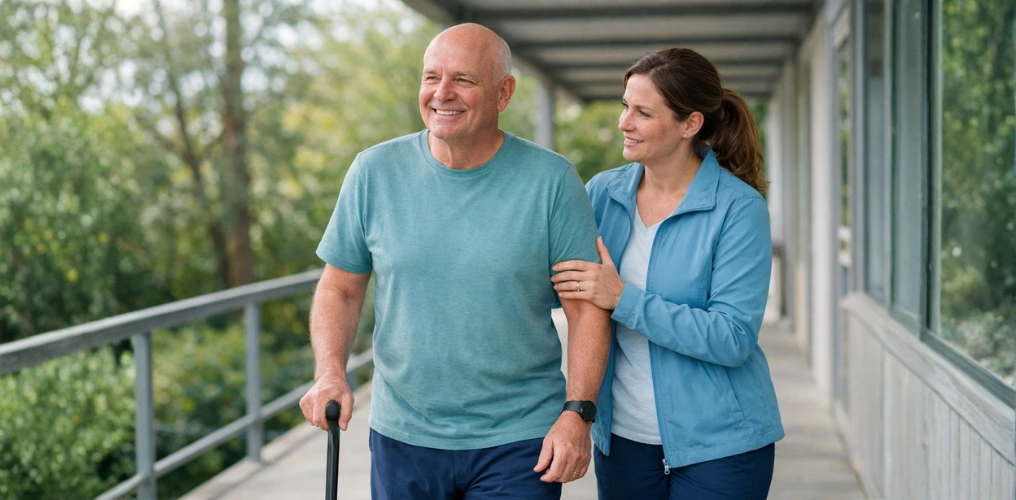
Maria, 34, was paralyzed from the waist down after a traumatic injury at 28. Following implantation and rehabilitation with our neural interface:
"The first time I moved my toes, I cried for an hour. My children had never seen me walk. Now we dance together in the kitchen."
Clinical trajectory
- Week 1: Initial voluntary toe movements during therapy
- Month 3: Improved standing with partial support and reduced spasticity
- Month 8: Walking short distances with assistive device
- Year 2: Independently navigating household tasks and dancing at family events
Rehabilitation notes: Progress involved intensive physiotherapy, iterative tuning of stimulation parameters, and ongoing support from a multidisciplinary team.
David's Story: Finding His Voice
David, 67, lost expressive speech after a stroke. Our neural speech interface (with an initial closed vocabulary) enabled:
"I can tell my grandchildren I love them. I can argue about politics. I can be me again."
Outcomes
- Reacquired expressive communication for daily conversations
- Gradual expansion of vocabulary and fluency with adaptive language models
- Improved social engagement and reduced caregiver burden
The Research Team's Perspective
Dr. Chen reflects:
"Technology alone is not enough — outcomes depend on strong clinical partnerships, empathetic care, and patient-centered design."
Challenges & realistic expectations
- Frustration & variability: Not all patients progress at the same rate; comorbidities and injury severity matter.
- Long-term commitment: Rehabilitation is a longitudinal process involving device calibration and skill training.
- Psychosocial support: Family education and mental health resources are essential for quality outcomes.
Clinical evidence & safety
Our early trials report measurable functional gains (standardized motor scales, speech intelligibility measures) and an acceptable safety profile. Long-term monitoring is ongoing to track durability and late effects.
Get involved
If you or a loved one could benefit from our clinical research, please visit our trials page to learn about eligibility, study sites, and enrollment procedures. Participation helps advance safer, more effective therapies for others.
Written by
Amara Okonkwo
Bioethics Advisor
Dedicated to pushing the boundaries of what's possible at the intersection of humanity and technology.