The Future of Neural Interfaces: Beyond Brain-Computer Integration
Exploring how next-generation neural interfaces will transform human-machine interaction and unlock unprecedented cognitive capabilities.

Emma Martin
Chief Research Officer
The Dawn of Neural Computing
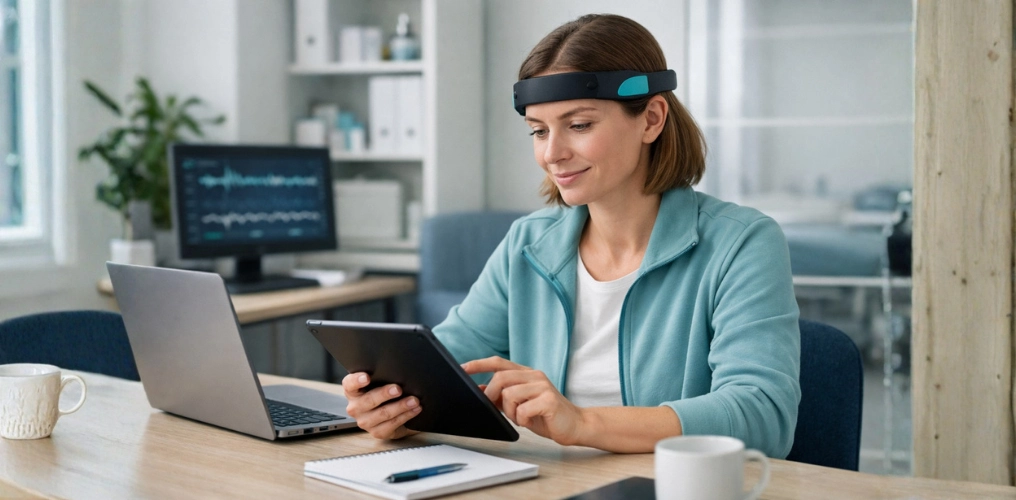
The convergence of neuroscience and artificial intelligence is ushering in an era where the boundaries between human cognition and digital processing are becoming increasingly fluid. Neural interfaces, once confined to science fiction, are now at the forefront of technological innovation.
Current State of Technology
Today's neural interfaces have already demonstrated remarkable capabilities and practical outcomes in clinical and research settings:
- Motor Restoration: Clinical trials show paralysed patients can control robotic limbs and cursors through decoded neural activity, restoring independence for daily activities.
- Sensory Augmentation: Devices like cochlear implants and retinal prostheses demonstrate that sensory function can be restored or enhanced using direct neural stimulation.
- Cognitive Augmentation (Early Stage): Research prototypes indicate the potential to support memory consolidation and attention modulation using closed-loop stimulation.
Use Cases & Short-term Applications
In the next 3–7 years we expect to see:
- Clinical Restorative Therapies: Population-scale access to technologies that restore lost motor or sensory functions.
- Assistive Communication: Low-latency neural speech interfaces enabling people with severe motor disabilities to communicate more naturally.
- Workplace Augmentation: Niche professional tools that enhance specific cognitive tasks (e.g., attention aids for air traffic control or surgeons).
The Next Frontier (Long-term Vision)
Looking further ahead, research and responsible engineering could enable:
- Direct Knowledge Transfer — incremental transfer of compact skill representations (procedural knowledge) to accelerate training.
- Enhanced Interpersonal Communication — high-bandwidth thought-assisted communication for collaborative teams.
- Extended Cognitive Workspaces — seamless coupling to cloud-based processors to augment reasoning or perception.
Safety, Security & Ethics
Innovation must go hand-in-hand with rigorous safety and ethical guardrails:
- Privacy by Design: Minimizing raw neural data collection and using local, on-device processing where possible.
- Security Engineering: Strong authentication and cryptographic safeguards for both stored models and streaming data to prevent unauthorized access.
- Informed Consent & Agency: Clear consent frameworks for research and commercial use, with mechanisms to revoke access and delete user data.
Regulatory Landscape & Societal Considerations
- Medical Pathways: Many early neural interface applications will follow medical device regulations and benefit from established clinical trial structures.
- Equity & Access: Without policy intervention, high-cost interventions could increase disparities; our approach emphasizes accessibility and tiered pricing models for equitable distribution.
Research Roadmap
Key technical milestones include:
- Robust, low-latency decoding of high-dimensional neural signals
- Energy-efficient, biocompatible hardware with long-term stability
- Scalable, privacy-preserving federated learning for personalization
Conclusion
At Technozlife we pursue a pragmatic, multidisciplinary approach: rapid prototyping, close clinical partnerships, and community engagement. Our goal is to enable technologies that restore function and enrich human experience—safely, ethically, and equitably.
For readers who want to dig deeper, see the references in our research notes and follow our lab updates.
Written by
Emma Martin
Chief Research Officer
Dedicated to pushing the boundaries of what's possible at the intersection of humanity and technology.